
BONESense on Heel Ultrasounds
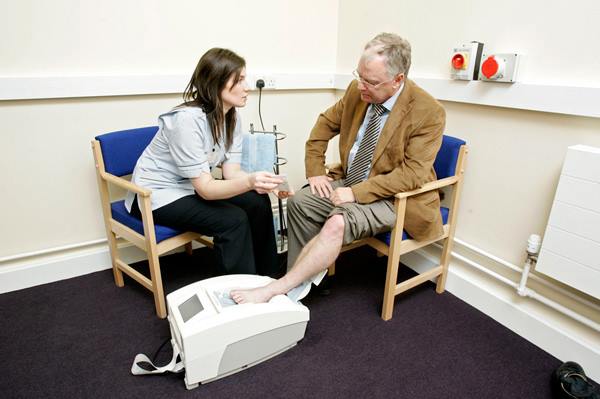
There are many ultrasound machines in the community – at the drug store, your doctor’s office and especially at health fairs. Is a heel ultrasound screening worth removing your shoe for? Probably not.

There are many ultrasound machines in the community – at the drug store, your doctor’s office and especially at health fairs. Is a heel ultrasound screening worth removing your shoe for? Probably not.
Dr. Diane L. Schneider, author of The Complete Book of Bone Health, asks “Are You Taking the Same Dose of Calcium Supplements Every Day?”
“Do you eat the same thing every day? Although what you eat for breakfast may be pretty routine, your other meals throughout the day are probably not. Are you a creature of habit when it comes to taking your calcium supplements?”
The IOM guidelines—1,000–1,200mg/day—include all sources of calcium, including your diet and other medications.
Calcium supplements are meant to supplement your diet. So you need to take your actual diet, which varies from day to day, into account when determining how much you need to supplement each day.
Read Dr. Schenider’s complete article on 4BoneHealth.org»
Buy her book, The Complete Book of Bone Health, on Amazon.com
From ScienceDaily, July 24, 2014
Female triathletes are at risk for pelvic floor disorders, decreased energy, menstrual irregularities and abnormal bone density, according to researchers at Loyola University Health System (LUHS). These data were presented today at the American Urogynecologic Society 2014 Scientific Meeting in Washington, DC.
The study found that one in three female triathletes suffers from a pelvic floor disorder such as urinary incontinence, bowel incontinence and pelvic organ prolapse. One in four had one component of the female athlete triad, a condition characterized by decreased energy, menstrual irregularities and abnormal bone density from excessive exercise and inadequate nutrition.
“There has been a surge in popularity of high-impact sports such as triathlons, but little has been known until now about the prevalence of pelvic health and certain other issues associated with endurance training and events,” said Colleen Fitzgerald, MD, study investigator and physiatrist, LUHS.
Researchers surveyed 311 women for this study with a median age range of 35 — 44. These women were involved with triathlete groups and most (82 percent) were training for a triathlon at the time of the survey. On average, survey participants ran 3.7 days a week, biked 2.9 days a week and swam 2.4 days a week.
Of those who reported pelvic floor disorder symptoms, 16 percent had urgency urinary incontinence, 37.4 percent had stress urinary incontinence, 28 percent had bowel incontinence and 5 percent had pelvic organ prolapse. Training mileage and intensity were not associated with pelvic floor disorder symptoms. Twenty-two percent of those surveyed screened positive for problematic eating patterns, 24 percent had menstrual irregularities and 29 percent demonstrated abnormal bone strength.
“While both pelvic floor disorders and the female athlete triad are prevalent in female triathletes, both are often ignored,” said Johnny Yi, MD, urogynecologist and study investigator. “Doctors should be aware of how common these conditions are in this group of athletes and treat patients appropriately to avoid long-term health consequences.”
Loyola University Health System. “Female triathletes at risk for pelvic floor disorders, other complications.” ScienceDaily. ScienceDaily, 24 July 2014. <www.sciencedaily.com/releases/2014/07/140724171801.htm>.
 The Yoga Librarian